


Iranian Sweets | 6 authentic and delicious Iranian sweets
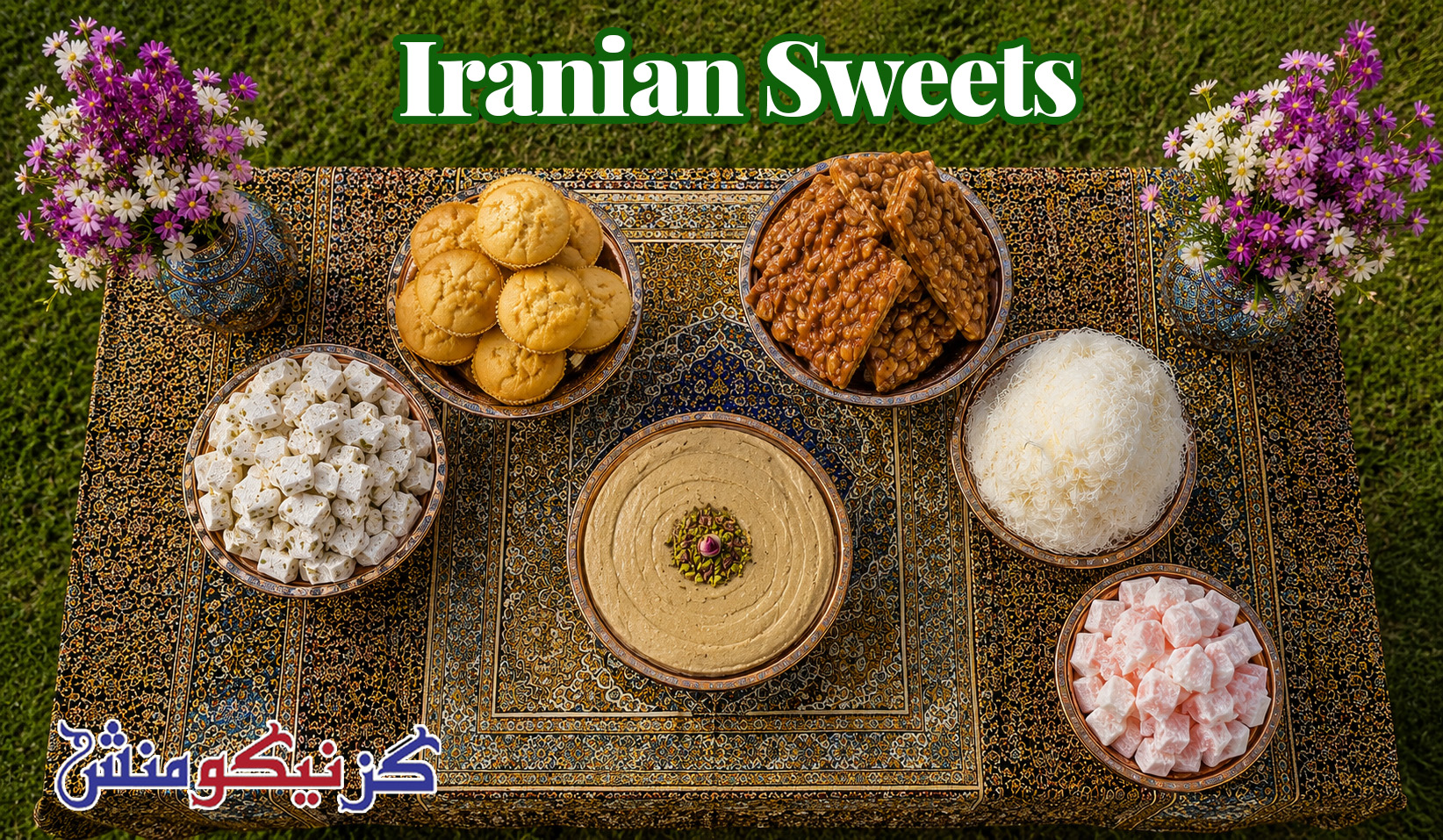
Iranian sweets
Iranian sweets are far more than mere culinary treats; they are edible narratives, woven deeply into the cultural tapestry and historical lineage of a civilization that spans millennia. Much like the deep-rooted architecture of an ancient tree, these confections represent centuries of refined artistic sensibility and meticulous craftsmanship.
To experience these delicacies is to look beyond simple sustenance. Every piece serves as a sensory celebration and bridge connecting generations to their storied heritage. There is a profound alchemy hidden within the flavor profiles of traditional Iranian sweets. Each note is a memory: the delicate, ethereal scent of Damask rose water (Golab) transports the senses to the verdant, historic gardens of Kashan, while the radiant crimson and golden hues of premium saffron evoke the warmth and majesty of the desert sun.
In this realm of confectionery, every ingredient tells a story, and every bite is a testament to an art form that has been perfected through time.
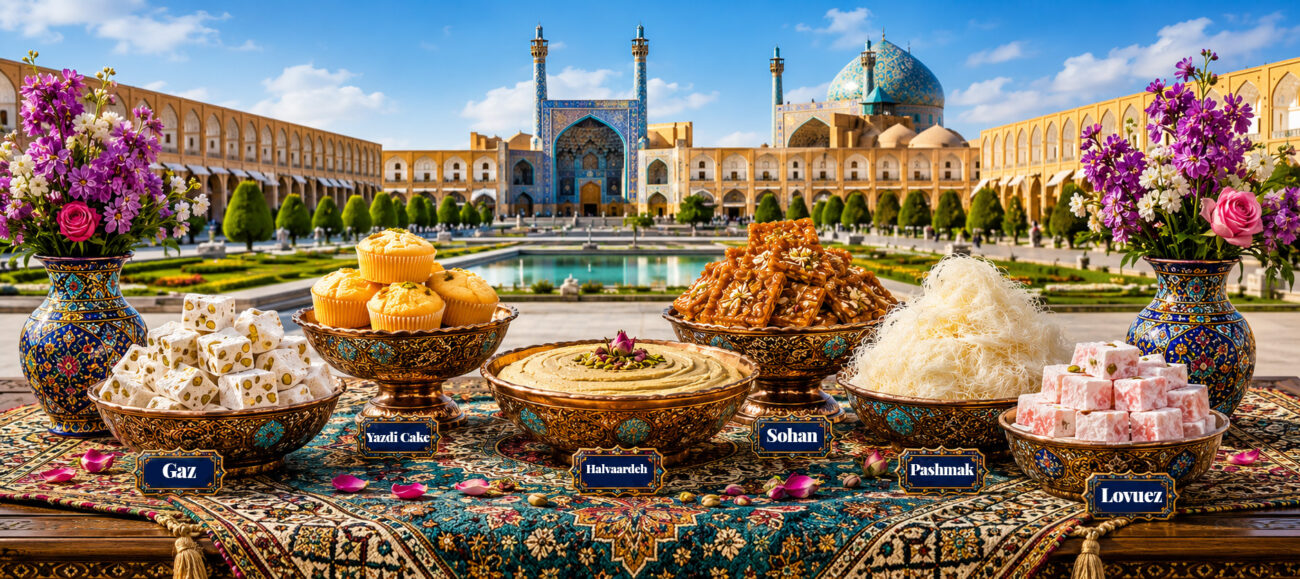
In this article, we explore a curated selection of authentic “Iranian sweets” that each serving as a historical artifact rooted in a rich cultural legacy. From the delicate textures of Yazdi cake to the iconic, chewy profile of Isfahan Gaz, we would examine these culinary treasures. We will also delve into the artistry behind Sohan, Louvez, and the airy lightness of Pashmak. Join us as we unveil these delectable “Iranian sweets”, detailing the unique heritage of each masterpiece.
Isfahan Gaz ( Nought)
We begin our journey with Isfahan Gaz, arguably the most famouse souvenir of all ” Iranian sweets”. Crafted from a harmonious blend of rosewater, egg whites, and premium nuts, this timeless confection remains an enduring symbol of Isfahan’s historic confectionery heritage. Whether you prefer the flour-dusted Gaz, traditional “Angabin”, or the crunch of pistachio and almond, “Gaz” offers a unique, chewy texture that is quintessential for any enthusiast of authentic “Iranian sweets”.
Like Gaz Angabin, a distinct variation of this beloved “Iranian sweet“. Its sweetness is derived from the natural nectar of the ” Milkvetch” plant, a practice historically employed to naturally sweeten “Gaz”. This nectar is not only a natural sweetener but also possesses medicinal properties, particularly beneficial for digestive health. This unique characteristic elevates “Gaz Angabin” as an exceptional example of ” Iranian sweets ” , offering a delightful taste experience that is as wholesome as it is delicious.
Yazdi Cake
Yazdi cake can be regarded as a symbol of the simplicity and charm found in ” Iranian sweets “. This beloved confection, a well-known emblem of Yazd’s cultural identity and one of Iran’s most famous souvenirs which is prized for its soft, sponge-like texture and gently mellow flavor. Its appeal is elevated by a fragrant aroma, created through the careful blending of rosewater and cardamom during baking.
Halvaardeh
Halvardeh is another delightful, nutritious, and popular choice among ” Iranian sweets “. It is crafted by combining ground sesame seeds with syrup or sugar. This ancient and flavorful confection is often served for breakfast, and when garnished with pistachios and almonds, it provides a sweet, satisfying, and energizing treat for those who appreciate such delicacies.
Sohan
Sohan, is a traditional sweet and a well-known souvenir from the city of Qom. This brittle and delicious ” Iranian sweet “, with its golden hue and crisp texture, is captivating to any enthusiast. It is prepared using a blend of cardamom, rosewater, nuts such as almonds and pistachios, and butter, making this delectable ” Iranian sweet ” an excellent choice to bring back as a souvenir from Qom.
Pashmak
Pashmak, with its fluffy, cotton-like appearance, evokes childhood memories for many Iranians. This delightful sweet is made from fine strands of sugar, created through a unique process that results in a wispy confection. Available in various flavors, including cocoa, vanilla, strawberry, and simple
Lovuez
Conclusion
In conclusion, the choice of which “Iranian sweet ” to experience ultimately rests on individual preference, as each confection is a unique repository of the nation’s authentic history and culture. For instance, the taste and texture of Yazdi cake can evoke the essence of its namesake city, or while savoring the exquisite flavor of Isfahani Gaz alongside a cup of traditional Persian black tea can unlock the city’s remarkable confectionary secrets.Should you wish to select a representative of the diverse Iranian sweets discussed, we highly recommend “Nikoomanesh” Gaz from Isfahan. With its long-standing tradition in crafting this delicious Iranian sweet in various forms—including Flour-dusted Gaz, with pistachios and almonds, and Nikoomanesh Angabin Gaz it offers a distinct yet authentic experience of what we recognize as “Iranian sweets”.
